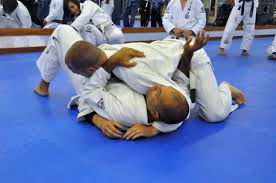
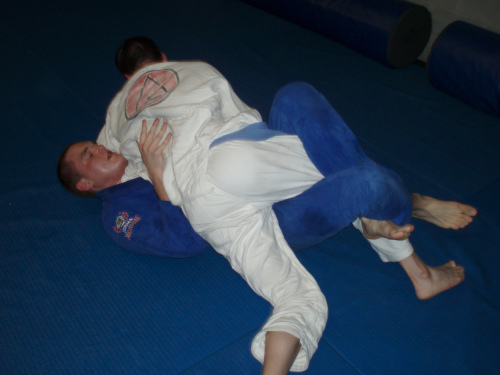
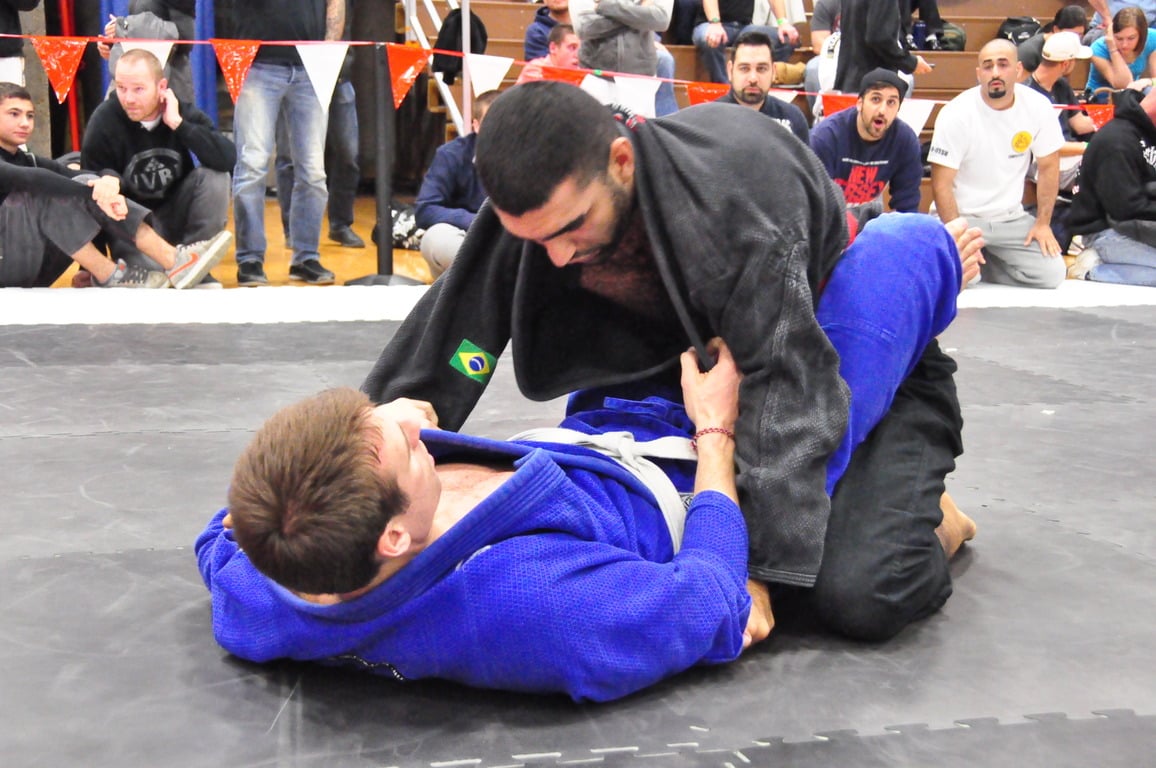
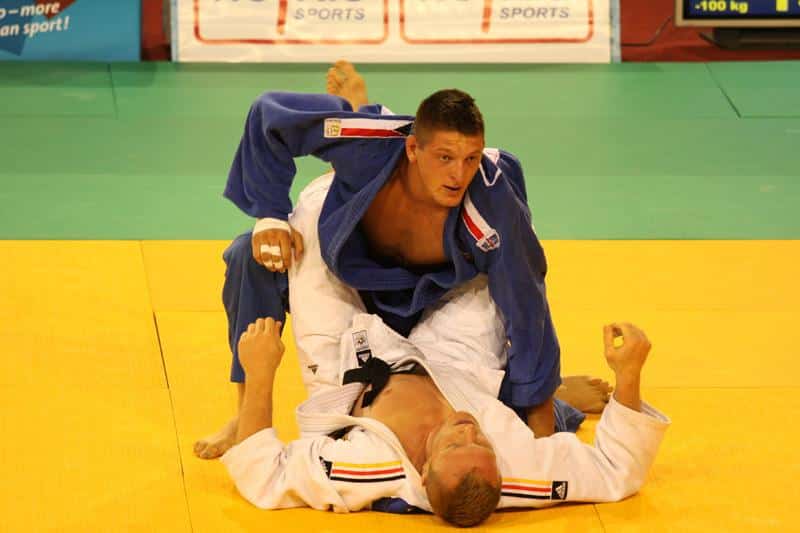
The armbar is the submission people try most. The choke from the back is the one that wins.
That’s what four studies and tournament reports say, covering more than 570 matches from white belts to world champions. In this part you’ll see the proof, in four charts.
Short on time? This part in four lines.
- Most top matches end with a choke from the back.
- Taking the back is the move that pays off most.
- Score first, and a guard pass is the best first score.
- Takedowns are the riskiest move at the top level.
This is Part 1 of the free 7-part BJJ Data Series. Parts 2 to 7 go out by email, one a week, as easy-to-save PDFs:
- Part 2: How to Take the Back (and Stop People Taking Yours)
- Part 3: The Only 20 BJJ Moves You Need (and the 5 to Learn First)
- Part 4: The 12-Month BJJ Plan for Busy Grapplers (Free Excel Tracker)
- Part 5: Strength Training for BJJ: Simple Lifts That Help on the Mat
- Part 6: Food, Supplements and Recovery for Grapplers
- Part 7: BJJ After 30: How to Beat Younger, Faster Opponents
New to BJJ? Tap here for the words used in this series
- Gi: the thick jacket and pants. You can grab them. No-gi: shorts and a tight shirt, with nothing to grab.
- Submission or tap: a hold that makes the other person give up by tapping. Choke: a submission on the neck.
- The back: being behind someone, holding them, with your legs wrapped around their hips. Seatbelt: your arms crossed over their chest and shoulder, like a car seatbelt. Hooks: your feet tucked inside their legs.
- Rear-naked choke: a choke from behind using your arms. Bow-and-arrow: a choke from behind using their gi collar.
- Guard: lying on your back with the other person between your legs. Closed guard: your legs locked around them. Half guard: you trap one of their legs.
- Pass: getting past someone’s legs so you’re on top. Sweep: flipping them from underneath so you end up on top.
- Mount: sitting on someone’s belly. Side control: lying across someone’s chest.
- Turtle: curled up on knees and elbows, like a turtle.
- Takedown: bringing someone from standing to the ground. Guard pull: sitting down and pulling them into your guard instead.
- Rolling: practice fighting. Positional rounds: rolling that starts from one set position.
- Instructional: a video course that teaches one topic.
- IBJJF and ADCC: the two biggest groups that run BJJ tournaments.
1. Most matches end from the back
At the 2023 IBJJF World Championships, the top black belt matches ended in 47 submissions. Chokes from behind were 21 of them. That’s almost half (45%). Armbars came second with 10. Triangles had only 4.[2] The move every white belt dreams about barely showed up.
IBJJF says chokes from behind were about half of these late wins at its three biggest events that year.[2]
No-gi is the same. At ADCC 2026, the rear-naked choke was 36% of the wins by submission. Heel hooks came second at 16%.[3] That number comes from one writer’s own spreadsheet, so treat it as a good guess. Still better than your gym’s group chat.
2. Taking the back pays off most
A 2023 study watched 93 matches from ADCC 2019.[4] When someone got behind their opponent, it led to a submission 61% of the time. That’s about 6 times out of 10. Passing the guard came second, at 25%.
The study also asked: how much does each move help you, and how much can it hurt you? Getting behind someone came out best by far. Takedowns and sweeps came out slightly bad. When someone tried a takedown, they got submitted 17% of the time, more than with any other move.
Want the moves behind these numbers? Part 2 shows exactly how to take the back, and how to stop people taking yours. Get it free by email →
In plain words: get behind people, and don’t throw yourself into wild takedowns. Your knees will send a thank-you card.
3. Score first, and passing is the best way
A 2026 study looked at 211 women’s matches from the 2020 IBJJF Pan Americans.[5] Whoever scored first won 87% of the time. When their first score was a guard pass, they won 93% of the time. That’s more than 9 out of 10.
The scientists are careful here. Scoring first goes along with winning, but it doesn’t prove that it causes the win. It’s still a better bet than the office raffle.
Here’s what each score is worth in the two biggest kinds of tournaments.[6][7]
| Score | IBJJF points (gi and no-gi) | ADCC points (second half of the match only) |
|---|---|---|
| Takedown | 2 | 2 |
| Sweep | 2 | 2 |
| Knee on belly | 2 | 2 |
| Guard pass | 3 | 2 |
| Mount | 4 | 3 |
| Back control | 4 | 3 (with your feet hooked in) |
In IBJJF, a pass is worth more than a sweep or a takedown, and the back is worth the most. So passing, then getting behind them, is the classic way to score first and stay ahead.
4. White and blue belts win with a few simple moves
A study of 140 white and blue belt gi matches found that most people use the same small set of moves.[8]
- Half the time, people started by pulling guard instead of doing a takedown, and it worked 94% of the time.
- Three passes were used most: the knee slice, the knee pin and the bullfighter.
- The armbar was the submission people tried most, at 34% of tries.
- The rear choke was only 7% of tries. But it worked 75% of the time, better than any other submission.
Everyone is fishing for armbars. The people who get behind their opponent are the ones catching fish.
Where to start, by belt
- White belt: spend your first three months on escapes and the back. In IBJJF tournaments, the only leg lock you’re allowed is the straight ankle lock, so skip heel hooks for now.[1]
- Blue belt: follow the full 12-month plan in Part 4 of the free email series.
- Purple belt and up: use the move list as a check. Any move you can’t do in rolling is your next thing to work on.
- Older, smaller or not very flexible: read Part 7 of the free email series, on changing the plan for your body, first.
What about women?
Some of the numbers include women. The 2023 Worlds numbers include men’s and women’s black belt matches, and women won 43% of those matches by submission, compared with 31% for men.[2] The score-first study was only women.[5] The ADCC 2019 study and the white and blue belt study were only men. Nothing we found says women should learn moves in a different order, but there’s less proof for women.
Different rules, different winners
Check your tournament’s rules before you plan your game. A move that wins under one set of rules can be banned under another. Heel hooking a white belt at an IBJJF event is a fast way to meet the referee.
| Rules | How you win | Heel hooks | What it rewards |
|---|---|---|---|
| IBJJF gi | Submission, then points, then “advantages” (almost-points) | Banned for every belt | Passing, holding positions, collar chokes |
| IBJJF no-gi | Submission, then points, then advantages | Only adult brown and black belts (white to purple belts can only use straight ankle locks) | Passing, the back, careful leg locks |
| ADCC | No points in the first half; in the second half, points, and penalties for pulling guard or stalling | Allowed | Takedowns, the back, leg locks |
| Submission-only | Submission, or the event’s extra-time rules | Usually allowed; check each event | The back, leg locks, staying safe |
Different sources disagree on exactly which belts can use heel hooks in IBJJF, so check the latest rulebook before you compete.[1]
How solid is the evidence?
Short version: good enough to train on, not good enough to win an argument with. Open the box if you want the receipts.
Where the numbers come from, and the holes in them
| Source | Event | How big | Level | Who | Gi or no-gi |
|---|---|---|---|---|---|
| IBJJF report[2] | 2023 Worlds | 128 matches, quarterfinals to finals | Black belt | Men and women | Gi |
| Lamas et al.[4] | ADCC 2019 | 93 matches | Top level | Men | No-gi |
| Williams et al.[8] | Different tournaments | 140 matches | White and blue belt | Men | Gi |
| Santos et al.[5] | 2020 Pan Americans | 211 matches | Not stated | Women | Gi |
| Haedicke[3] | ADCC 2026 | All divisions | Top level | Men and women | No-gi |
What the numbers can’t tell you
- The studies are small: one tournament here, one there, and mostly men.
- The IBJJF numbers come from IBJJF’s own report, and the ADCC 2026 numbers come from one writer’s spreadsheet.
- The white and blue belt numbers are from an early version of that study.
- What works for top athletes won’t all work for your body, your age or your gym. Change it to fit you.
Still, every source points the same way. Survive. Get behind them. Pass the guard. Score first. Everything else is decoration.
Fair questions about the numbers
Do chokes from the back win at my level too?
Probably. In the white and blue belt study, the rear choke worked 75% of the time, the best of any submission.[8] But that’s one study of men in the gi, so it’s not the final word.
Do top players win from the back just because they’re already good at it?
Maybe partly. These studies show what happens, not exactly why. Still, every study points the same way, and the back gives you the most points in IBJJF.[6]
Why trust ADCC 2026 numbers from a blogger?
You don’t have to. We use them only to show that no-gi looks like the gi, and the official IBJJF numbers and the ADCC 2019 study say the same thing.[2][4][3]

Key takeaways
- Chokes from the back were 45% of top black belt submissions at the 2023 Worlds.[2]
- At ADCC 2019, taking the back led to a submission 61% of the time.[4]
- Whoever scored first won 87% of the time, and 93% when the first score was a pass.[5]
- Takedown attempts were the move most likely to get you submitted at ADCC.[4]
What the rest of the series fixes
Part 1 tells you what wins. It doesn’t tell you how to do any of it. Each part after this one picks up a problem the one before it leaves behind.
- Part 1, the one you just read, fixes the wrong target. You’ve been drilling the famous move instead of the winning one. It also fixes four smaller mistakes: chasing submissions instead of position, falling in love with takedowns, not knowing that the first score usually decides the match, and building a game without reading your rulebook.
- Part 2 fixes the gap between knowing and doing. Part 1 proves the back pays best. It doesn’t teach you one way to get there. Part 2 does, and it spends the same time on the other half of that number, because if most matches end from the back, that is also where most of your losses are waiting.
- Part 3 fixes move hoarding. YouTube hands you a thousand techniques and no order to learn them in, so you collect moves you can’t hit on anyone who fights back. This cuts the list to 20, and names the 5 to learn first.
- Part 4 fixes training hard with nothing to show for it. Knowing the right 20 moves still doesn’t tell you what to work on in week 7. The plan fills in your dates by itself, and the tracker gives you a straight answer at the end of the year instead of a feeling.
- Part 5 fixes the gym half. Most grapplers either don’t lift at all, or lift like they’re training for a beach holiday. Neither one helps your guard. This is the short list of lifts that show up on the mat, plus the ones that keep you off the injury bench.
- Part 6 fixes under-recovery. If you have a job, recovery is your limit, not effort. This part sorts the food and supplements that do something from the ones that mostly empty your wallet.
- Part 7 fixes the age mismatch. Every study on this page is elite athletes, mostly young men, mostly at their peak. You may be none of those things. Part 7 keeps the plan and changes the parts your knees won’t agree to.
Part 1 is the map. Parts 2 and 3 are the moves. Part 4 is the calendar. Parts 5 to 7 are the body that has to carry all of it.
Know someone who keeps hunting armbars? Send them this.
Share on Facebook Share on WhatsApp Share on X Email it
What’s the submission you get caught with most? Tell us in the comments.
Get the full 7-part BJJ Data Series, free
Join the Tap of the World email list and you’ll get:
- Straight away: the free Excel 12-month plan (your dates fill in by themselves, with a move checklist, a lift log and a progress log) and the BJJ cheat sheet
- Then one PDF a week: Part 2, how to take the back; Part 3, the 20 moves; Part 4, the 12-month plan; Part 5, strength training; Part 6, food and recovery; Part 7, BJJ after 30
What happens next: type your email below and press the button. Confirm your email, and your first email arrives within a few minutes with the Excel plan. Part 2 follows a week later. Joining late? You still get every part, starting from Part 2. Check your spam folder if nothing arrives. You can unsubscribe any time.
Next up, Part 2: “How to Take the Back (and Stop People Taking Yours)” goes out by email. Sign up to get it.
FAQ
What is the best submission in BJJ?
At the top level, the choke from behind. It was 45% of the top black belt wins at the 2023 IBJJF Worlds, and the rear choke worked 75% of the time in a study of white and blue belts.[2][8]
Should I pull guard or do a takedown?
At white and blue belt, pulling guard worked 94% of the time in one study.[8] At ADCC, trying a takedown was the move most likely to get you submitted.[4] Pulling guard is safer in the gi. In no-gi and ADCC, learn at least one takedown.
Sources
- Leg lock rules: BJJ Eastern Europe, Where and When Are Leg Locks Allowed in BJJ? (2021); House of Grapplers, IBJJF no-gi rules
- IBJJF, 2023 World Championships Submission Breakdown
- Austin Haedicke, ADCC 2026 Recap, Part 1
- Lamas et al. (2023), No-gi Brazilian jiu-jitsu: A Markovian analysis of elite-level combat dynamics, International Journal of Sports Science & Coaching
- Santos et al. (2026), First Scoring-Event Acquisition Is Associated with Victory in Female Brazilian Jiu-Jitsu, Sports 14(10):445
- FloGrappling, How Does the 2025 IBJJF Point System Work?
- House of Grapplers, ADCC rules
- Williams, Callaway, Tattersall and Gara, Technique utilisation and efficiency in competitive Brazilian Jiu-Jitsu matches at white and blue belts (preprint)